IranseizestwovesselsinStraitofHormuz
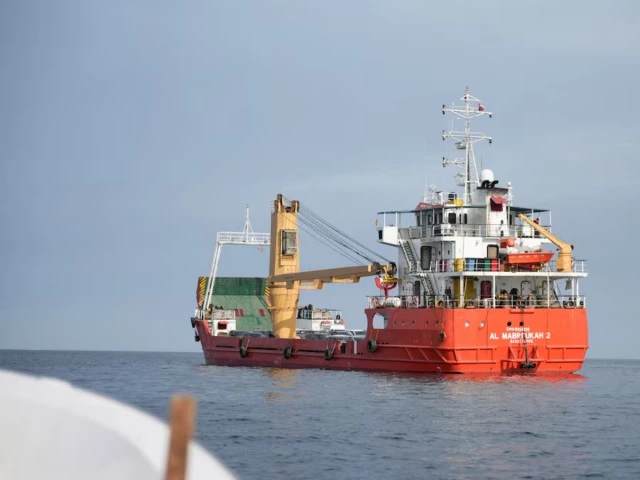
(Daily Jurat)Iran’s Islamic Revolutionary Guard Corps (IRGC) said its naval forces intercepted two vessels in the Strait of Hormuz on Wednesday over alleged violations.In a statement, the IRGC Navy said the vessels – identified as MSC Francesca, which it described as “linked to Israel,” and Epaminodes – were stopped for repeated violations, including operating without authorization and allegedly tampering with navigation systems.
The force said the vessels were attempting to exit the strait “covertly” and were intercepted based on intelligence monitoring.According to the statement, both vessels have been transferred to Iranian territorial waters for inspection of their cargo and documentation.
The IRGC Navy said it continues to monitor maritime traffic in the waterway and warned that any actions violating Iran’s navigation rules or threatening maritime security would be met with “decisive and legal action.”
The UK Maritime Trade Operations (UKMTO) said early on Wednesday a cargo ship came under gunfire near Iran’s coast in the Strait of Hormuz, marking the second such reported incident that day.The agency said a vessel was fired upon approximately 8 nautical miles west of Iran’s coast and later stopped, though no damage or casualties were reported.
In another incident, a container ship reported being approached by a gunboat linked to the IRGC near the strait.
UKMTO said it has received dozens of reports of attacks and suspicious activities affecting vessels in the region since late February.Earlier, the IRGC said it is prepared to deliver new achievements and “surprises”, warning of responses to any renewed act of aggression, according to Iran’s semi-official Tasnim News Agency. In a statement released on Wednesday, the IRGC described itself as a force ready to deploy new capabilities in the battlefield against an aggressive and untrustworthy enemy.
The statement said the Iranian nation takes pride in the IRGC’s comprehensive strategic capabilities, alongside other branches of the Armed Forces, noting that their missile and drone strikes have left the Israeli and US forces strained and weakened.According to Tasnim, referring to the current phase described as a “silence in military confrontation,” the IRGC stressed the need for vigilance and monitoring of the enemy’s behaviour during negotiations and the ceasefire” period.
Iran’s military said early on Wednesday that it would immediately strike pre-designated targets if the US launches any new attack on the country, according to state television.
The warning came in remarks by Ebrahim Zolfaghari, the spokesperson for Iran’s Khatam al-Anbiya Central Headquarters, following what he described as repeated threats by US President Donald Trump and American military commanders.
“Our capable and powerful forces have long been in a state of 100% readiness and are ready and on the trigger,” Zolfaghari said. He added that in the event of “aggression and any action against the Islamic Republic of Iran,” Iranian forces would “immediately and powerfully attack pre-determined targets.”Iranian Ambassador to the United Nations Amir-Saeid Iravani responded to US President Donald Trump’s ceasefire extension, stating that there will be no talks with the US until the blockade is lifted.“The United States must halt its ‘violation of the ceasefire’ before any new round of negotiations,” the ambassador told Iranian media outlet Shargh, according to Al Jazeera.
“As soon as they lift the blockade, the next round of negotiations will be held in Islamabad,” the ambassador said, adding, “Iran is prepared for any scenario.” “We have not been the initiator of military aggression. If they seek a political solution, we are ready. If they seek war, Iran is ready for that as well,” he added.
In an interview with the BBC, Spokesperson for the Iranian Foreign Ministry Esmaeil Baghaei said Iran entered the first round of talks with seriousness and goodwill, but lashed out at Washington for repeatedly shifting positions, maintaining its naval blockade, and taking hostile actions that undermine the diplomatic process, reported Iran’s semi-official Tasnim News Agency.
He said Iran’s delegation to the first round of Pakistani-mediated talks with the US had gone to Islamabad “with good faith and sense of seriousness, but you have a negotiating party that has shown its lack of seriousness, lack of good faith”.
“They’re changing their position frequently,” he said.
According to Tasnim, he pointed to “flip flops, threats of war crimes,” referencing US President Donald Trump’s social media posts and recent interviews where he threatened to “knock out every single power plant, and every single bridge” if Iran did not accept what he called the US’s offer of a “very fair and reasonable deal”.
Asked whether Iran had agreed to attend a new round of talks in Islamabad and then changed its decision, Baghaei said, “We never said we were going and then reneged our commitments – as is the habit of the United States.”
UN Secretary-General Antonio Guterres has welcomed an announcement by the US to extend the ceasefire with Iran, his spokesman said on Tuesday.
“This is an important step toward de-escalation and creating critical space for diplomacy and confidence-building between Iran and the United States,” Stephane Dujarric said in a statement.
The statement came after US President Donald Trump said that Washington would extend its ceasefire with Iran to allow time for Tehran to prepare a “unified proposal” following a request by Pakistani officials.
Dujarric said the UN encourages all parties to refrain from actions that could undermine the ceasefire and engage constructively in negotiations to reach “a sustainable and lasting” resolution.
Noting that Guterres fully supports Pakistan’s efforts to facilitate continued dialogue, Dujarric expressed hope that these diplomatic efforts would help establish the conditions necessary for a “comprehensive and durable resolution” to the conflict.
Trump’s announcement came as a US delegation led by Vice President JD Vance was expected Tuesday to travel to Islamabad for a second round of face-to-face talks with Iran, though the trip was delayed.
The negotiations would have followed an initial round of high-level engagement in Pakistan earlier this month, which ended without a breakthrough.
The ceasefire, initially announced earlier this month, had been set to expire on Wednesday.
Arab foreign ministers on Tuesday demanded that Iran pay compensation for damage caused by what they described as Iranian attacks on Arab countries and its closure of the Strait of Hormuz.
The position came in a resolution passed during an emergency Arab League meeting held by video conference under Bahrain’s chairmanship.
The resolution said Iran bears “full international responsibility” for attacks targeting Jordan, the United Arab Emirates, Bahrain, Saudi Arabia, Oman, Qatar, Kuwait, and Iraq, and is obliged under international law to provide “full reparation” for all resulting losses and damages.
It also condemned Iran’s closure of the Strait of Hormuz and threats to shut the Bab el-Mandeb Strait, saying such actions violate international law and the principle of freedom of navigation.
Abdullatif Al Zayani, Bahrain’s foreign minister, said Iran’s actions disrupted maritime traffic, threatened energy security, food and medicine supplies, and harmed global trade and the world economy.
He said Tehran must also be held accountable for the consequences of closing the Strait of Hormuz to international navigation.
Earlier this month, Iran demanded compensation from Saudi Arabia, Qatar, the UAE, Bahrain, and Jordan, claiming the countries had taken part in the war against Tehran.
Hostilities in the region escalated after the US and Israel launched joint strikes on Iran on Feb. 28. In response, Tehran carried out retaliatory strikes on Israel and other regional countries hosting US assets.US President Donald Trump said he would indefinitely extend the ceasefire with Iran to allow for further peace talks, although it was not clear on Wednesday if Iran or Israel, the US ally in the two-month war, would agree.
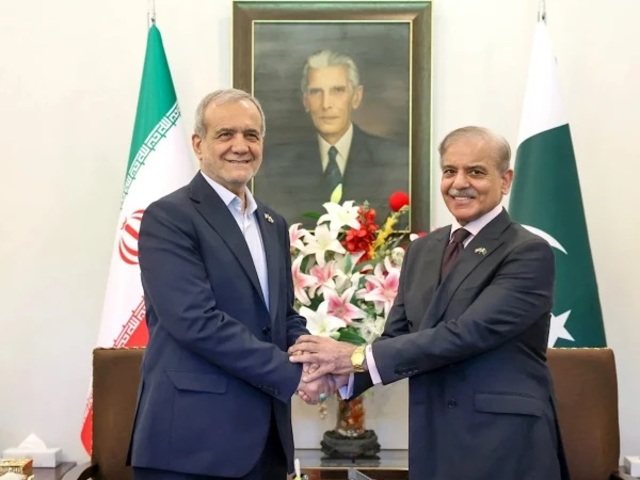
Trump said in a statement on social media that “Upon the request of Field Marshal Asim Munir, and Prime Minister Shehbaz Sharif, of Pakistan, we have been asked to hold our attack on the Country of Iran until their leaders and representatives can come up with a unified proposal.”Pakistan’s leaders have hosted peace talks in Islamabad to end a war that has killed thousands of people and shaken the global economy.
But even as he announced what appeared to be a unilateral ceasefire extension, Trump also said he would continue the US Navy’s blockade of Iran’s trade by sea, considered an act of war by Iran.
There was no response from senior Iranian officials early on Wednesday to Trump’s announcement, although some initial reactions from Tehran suggested Trump’s comments were being treated sceptically.Tasnim News Agency, affiliated with the Islamic Revolutionary Guards Corps, said Iran had not asked for a ceasefire extension and repeated threats to break the US blockade by force. An adviser to Iran’s lead negotiator, the speaker of parliament, Mohammad Bagher Ghalibaf, said Trump’s announcement carried little weight and may be a ploy.
Trump’s wartime rhetoric has veered between extremes. In an expletive-filled threat against Iran only two weeks ago, he promised that a “whole civilisation will die tonight”, while at other times he has appeared keen to end the violence and market uncertainty.
With his announcement, Trump again pulled back at the last moment from his threats to bomb Iran’s power plants and bridges. United Nations Secretary General António Guterres and others have condemned those threats, noting international humanitarian law forbids attacks targeting civilians and civilian infrastructure.
In a separate Truth Social post, Trump has claimed that Iran is “collapsing financially” and “wants the Strait of Hormuz open immediately” as they are “starving for cash!” He has also claimed that the military and the police are “complaining that they are not being paid.”
About the Author