iranfmabbasaraghchi
The last round of peace talks had been expected on Tuesday but never took place, with Iran saying it was not yet ready to commit to attending and a US delegation led by Vice President JD Vance never leaving Washington.
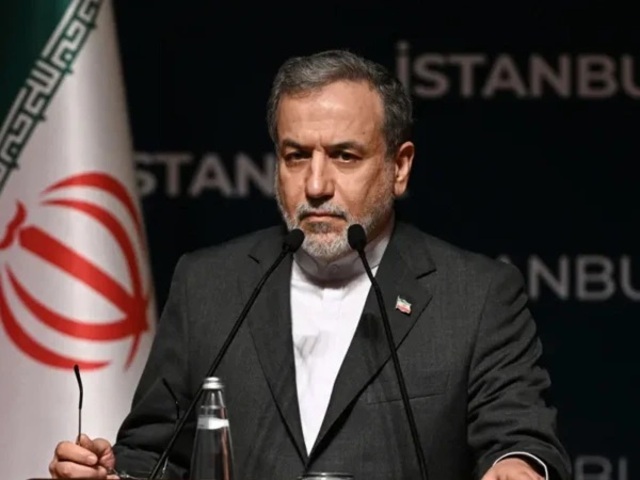
Earlier, Deputy Prime Minister and Foreign Minister Ishaq Dar discussed regional developments, the ceasefire, and ongoing diplomatic efforts by Pakistan in the context of the US-Israeli war on Iran in a telephone call with FM Araghchi.
According to a statement by the Ministry of Foreign Affairs, FM Dar underscored the importance of sustained dialogue and engagement to address outstanding issues to advance regional peace and stability at the earliest. FM Araghchi appreciated Pakistan’s consistent and constructive facilitation role in this regard.
According to Press TV, Iran rejected Israel’s “baseless accusations” about the Islamic Republic’s role in Lebanon. It said Israel uses such accusations as a pretext to justify its persistent violations of Lebanon’s sovereignty and territorial integrity.
The Iranian defence ministry said that Iran will continue producing military equipment and that it is prepared to meet the armed forces’ needs in all scenarios, including war and peacetime conditions, according to Press TV.
A senior Islamic Revolution Guards Corps (IRGC) commander said on Thursday night that Trump has suffered a strategic failure, adding that Washington’s military apparatus can not defeat the Iranian nation, as per Press TV.
IRGC’s political deputy Brigadier General Yadollah Javani addressed thousands of people who took to the streets in Arak to voice support for the Islamic Republic against the US-Israeli aggression which began on February 28.
According to Press TV, Javani noted that the United States, the Zionist regime, and their allies wrongly believed a direct, full-scale assault would overwhelm Tehran in less than 48 hours.
“Today, Trump wants to force the great Iranian nation to surrender, while God has blocked the path of the infidels’ and falsehood’s domination over the believers, and Trump does not understand it,” Javani said, adding, “Trump will never defeat the Iranian nation.”
Iran has also said that they “reject” Arab League’s accusations that it is sowing insecurity in the region, emphasising that Iran’s defensive measures against US military bases and some Persian Gulf littoral states fall within Tehran’s inherent right to self-defence under the UN Charter, as per Press TV.Meanwhile, Commander in Chief of the Iranian Army Major General Hatami stated on X that “through the strong unity of the nation, the armed forces, and the three branches of the government, we will make the criminal aggressor regret its actions.”
“Their navy is gone. Their air force is gone, their anti-aircraft is gone …maybe they loaded up a little bit during the two-week hiatus, but we’ll knock that out about one day, if they did,” he said.”I want to make the best deal. I could make a deal right now … but I don’t want to do that. I want to have it everlasting,” Trump added. “I want a great deal where our nation and the world is safe from lunatics with nuclear weapons.”
Al Jazeera reported that Iran granted “friendly” countries, including Russia, a fee exemption to transit the Strait of Hormuz, according to the Russian state news agency RIA Novosti.
“We have provided exceptions for some countries. I don’t know what will happen in the future,” Iranian Ambassador to Moscow, Kazem Jalali, told the news outlet. “At the moment, our Foreign Ministry is trying to use the exceptions provided for friendly countries, for example Russia,” Jalali said.Tehran has floated plans to levy tariffs on shipping in the strait amid the US-Israel war on Iran.
Iran’s use of a swarm of small, fast boats to seize two container ships near the Strait of Hormuz undermines suggestions that US forces have disabled its naval capabilities.
Trump on Monday acknowledged that while Iran’s conventional navy had been largely destroyed, its “fast-attack ships” had not been considered much of a threat.
He said any such vessels coming near a US blockade set up outside the strait would be “immediately ELIMINATED” using the “same system of kill” deployed in the Caribbean and Pacific, where US air strikes have hit suspected drug boats and killed at least 110 people.
Those boats were not attacking large, unarmed commercial ships, however, nor nearly as heavily armed, with Iran’s Revolutionary Guards sporting heavy machineguns, rocket launchers and, in some cases, anti-ship missiles.Speedboat attacks now form part of a “layered system of threats,” alongside “shore-based missiles, drones, mines and electronic interference to create uncertainty and slow decision-making,” Greek maritime security company Diaplous told Reuters.
Iran was estimated to have hundreds, if not thousands, of these boats before the war, often hidden in coastal tunnels, naval bases or among civilian vessels, according to maritime security specialists.
Some 100 or more may have been destroyed since the US-Israeli war on Iran began on February 28, said Corey Ranslem, chief executive of maritime security group Dryad Global.
Israel and Lebanon on Thursday agreed to extend their ceasefire by three weeks after a high-level meeting between representatives of both countries in the White House Oval Office, Trump announced on social media.
“I look forward in the near future to hosting the Prime Minister of Israel, Bibi Netanyahu, and the President of Lebanon, Joseph Aoun. It was a Great Honor to be a participant at this very Historic Meeting!” Trump said.Before this week, Iran had relied on missile and drone strikes to hit shipping traffic around the strait, a route which normally handles 20% of the world’s daily oil and liquefied natural gas supply.
Those attacks had stopped with the April 8 ceasefire.
The seizure of the two container ships by Iran followed Washington’s imposition of a blockade on Iran’s trade by sea and the start of it intercepting Iran-linked oil tankers and other ships.
“The civilian shipping industry is not equipped to prevent Iranian armed forces from seizing vessels,” said Daniel Mueller, a senior analyst at British maritime security company Ambrey.
Typically, about a dozen boats are used in a seizure operation, he added.
Iran’s fast boats now serve as the “backbone” of Iran’s naval strategy, able to deploy rapidly as part of its “asymmetrical war against the enemy,” a senior Iranian security official told Reuters.
“Because of their very high speeds, these boats can successfully carry out hit-and-run attacks without being detected,” the official said, speaking on condition of anonymity.
Including this week’s seizures, Iran has used small, fast boats at least seven times going back to 2019, Ambrey’s Mueller said.
High winds and swells in the waters off Iran during summer make it hard to conduct such operations, said one Iranian shipping source familiar with the waters.
“When it is very bumpy, they (armed forces onboard) cannot shoot,” the source said.
They are also ill-equipped to go head-to-head with a warship, and would likely suffer “very heavy casualties” in any direct assault on one, said Jeremy Binnie, a Middle East specialist at defence intelligence company Janes.
“Even if they tried to saturate the ship’s defences by attacking from multiple directions, they would be extremely vulnerable to the air support that would be called in,” he said.
On paper, guided missile strikes would easily destroy these boats, but shoulder-fired missile launchers would pose a threat to low-flying US aircraft, Binnie said.
“It is going to be much harder to eliminate the small boat threat than it was to destroy Iran’s larger naval vessels, which were big targets that were relatively easy to find and track and, at most, only had a limited ability to defend themselves from air attack,” he said.
The reality for the shipping sector is further disruption as well as elevated insurance costs.
After the so-called “tanker war” of the 1980s, Iran increasingly used asymmetric tactics as the Iranian navy was effectively destroyed, much as it has been in the current conflict, said Duncan Potts, a director with consultancy Universal Defence and Security Solutions and a former British Royal Navy vice admiral.
“When the US Navy and the president say, ‘We’ve destroyed the navy, we’ve sunk a frigate off Sri Lanka’ – you’ve done that before, but you’ve forgotten that your opposition here went asymmetric. And they’ve perfected it.”
About the Author