marco robio
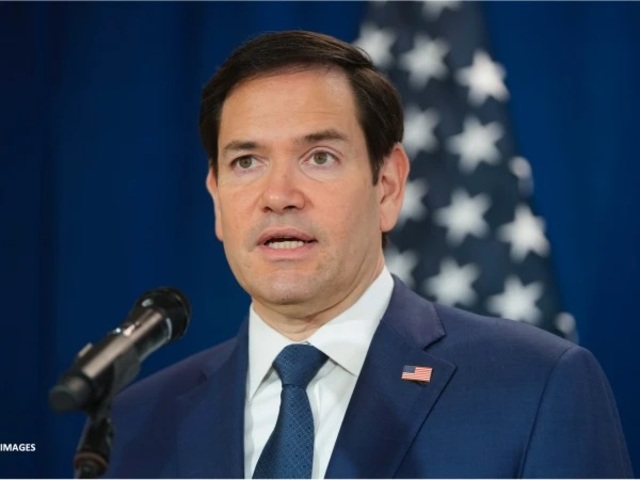
Rubio warned that US President Donald Trump has “many options available” if Tehran does not cooperate, and according to Al Jazeera, said regarding the Islamabad Memorandum of Understanding Article 5 that “I don’t think that’s [power over the Strait] what the MoU says, so that’s not the way we interpreted it from the very beginning.”
“We understood that to mean that they would ensure that no ships were being blown up. … The MoU does not give them the right to launch drones and missiles against commercial shipping vessels.”He added that he believed “everybody here understands that the US would love to reach a diplomatic settlement. We would love to reach an agreement if it were possible with Iran that would ensure they never have a nuclear weapon, and obviously help stop them,” Rubio told reporters in the Philippines.
Rubio said that the US would prefer an agreement where the Iranian side “says we’ll no longer sponsor terrorism and we will not pursue a nuclear weapon or the things you need for a nuclear weapon.”He noted that Trump “always prefers to negotiate and reach a deal on these things, and we are prepared to do that. We’ve tried to do that now for a year and a half, but we’re also not going to sit by and let ships be blown up or Americans be attacked.”
“The president has many options available to him if they continue to insist on not being cooperative. And I won’t get ahead of the president on any of those. But I think Iran knows we have many options as well.”He reiterated that the US is not going to accept Iran’s targeting of “global shipping and international waterways,” adding: “There are other countries that should feel just as strongly as we do because they’re actually more impacted by it than we are.”
Iranian Foreign Ministry spokesperson Esmaeil Baghaei condemned the “repeated US attacks and threats against Iran’s peaceful nuclear facilities” in a post on X on Wednesday.
He said the attacks constituted “a flagrant violation of the core principles of the UN Charter, international law, and the relevant resolutions of the IAEA Board of Governors, General Conference, and UN Security Council”, and also revealed “the United States’ deep-rooted enmity toward Iran’s scientific progress and technological development.””Iran’s nuclear activities have been fully declared to the IAEA in accordance with its safeguards obligations. Washington’s obsessive focus on Kolang Kouh where no nuclear activity is taking place, is nothing more than a fabricated pretext for aggression, destruction, and sabotage.”History of wars is written by the depth of impact, not the total death count, said Iran’s ambassador to Germany in response to US President Donald Trump’s recent message comparing the war of aggression against Iran to other US wars in terms of duration and casualties, according to IRNA.Earlier, in a post on his Truth Social, Trump compared the wars in Afghanistan, Iraq, Vietnam, Korea, Venezuela, and the war against Iran, listing the duration and number of American casualties in each, claiming that the war with Iran has resulted in 18 American deaths in less than four months.
Majid Nili rebuked Trump’s focus on US casualties, saying that the true historical weight of a war lies in how broad and deep its repercussions are.
According to IRNA, he said that four months was enough for two American smart missiles that hit the Minab elementary school to reveal the true face of American warmongering.
At least 168 schoolchildren and their teachers were killed on February 28 when a US strike hit Shajareh-Tayyebeh primary school in Iran’s southern city of Minab.
A drone was destroyed over the capital of Iran after air defence systems were activated, according to Al Jazeera.According to the semiofficial Fars News Agency, the drone was shot down during nighttime attacks after the Islamic Revolutionary Guard Corps deployed air defence systems over the city.No information was shared regarding the specific location in Tehran where the drone was taken down, its country of origin or its target.
After a US announcement that it had launched another nighttime attack on Iran, numerous explosions were reported in different parts of the country.The Iranian army said on Wednesday it launched a new wave of drone attacks targeting US military facilities at Al-Azraq US base in Jordan and Sheikh Isa US base in Bahrain, according to state media.
Iran’s official broadcaster IRIB reported that the operation began Wednesday morning and targeted US military infrastructure at the two bases.
According to the report, Iranian forces struck “housing and welfare facilities” as well as “equipment storage sites used by the US military” at Al-Azraq US base in Jordan.
Drones also targeted “large equipment warehouses and heavy aircraft maintenance and repair workshops” at Sheikh Isa US base in Bahrain, the army said.There was no immediate comment from Jordan or Bahrain.
The reported attacks came a day after Iran said it had launched missile strikes on US-linked military targets in Jordan and Bahrain.
Jordanian authorities said their air defence systems intercepted and destroyed several Iranian missiles and drones that entered the kingdom’s airspace. In contrast, Bahrain’s military said it had intercepted and destroyed several Iranian aerial attacks after air raid sirens sounded across the country.
Iran’s military also said on Wednesday that it launched a new wave of drone strikes against US military facilities in Kuwait, claiming it targeted a key American base “a few hours ago,” the semi-official Tasnim News Agency reported.
Iranian forces used “a large number of attack drones” to strike ammunition depots and logistical equipment belonging to the US Army at Camp Doha in western Kuwait.
The report said the attack targeted the storage facilities and “logistical equipment of the land forces command centre.”Iran’s Fars news agency reported that a man arrested and tried on charges of belonging to an “anti-revolutionary terrorist group” and committing “operational acts benefitting the US and Israel” was executed following a judicial ruling, according to Al Jazeera.
The individual was identified as Mehdi Khanki. According to the report, he was arrested in Karaj after security forces discovered an arsenal in his home, including handguns, ammunition, explosive remotes, handmade grenades, shoulder-fired explosive tubes and high-destruction bombs.
Jordan’s military intercepted four Iranian missiles targeting the kingdom, while two other missiles fell in remote, uninhabited areas, according to the Petra news agency, as per Al Jazeera.
Citing an anonymous military source, the agency said that air defence systems detected six missiles coming from Iranian territory and dealt with them immediately upon entering Jordanian airspace.
It added that there were no casualties or material damage due to the attack.A statement by neighbouring Israel’s military said an Iranian missile attack targeted the kingdom, according to Al Jazeera.Plumes of smoke could be seen overhead in the Red Sea city of Aqaba in videos filmed by people in nearby Eilat, Israel, according to The Associated Press.
Jordan has been repeatedly targeted by Iran for allowing the deployment of US troops and aircraft on its territory.Another recent attack on Aqaba saw Israeli officials warn that there could be a spillover of the Iranian attacks into its territory.US Secretary of State Marco Rubio said on Wednesday the United States is still willing to negotiate an end to the Iran crisis but Tehran is not serious about talks, as the widening conflict disrupted two of the world’s most critical energy chokepoints.
Rubio made his comments in a meeting of Southeast Asian foreign ministers a day after three oil tankers carrying Saudi crude to Asia reversed course in the Red Sea, apparently in response to threats from Yemen’s Houthis.The Houthis, who control the coast at the mouth of the Red Sea, announced a naval blockade on Saudi Arabia on Monday, opening a potential new front in the war which has killed thousands of people across the Gulf since it began on February 28 with US and Israeli attacks on Iran.
With Iran already threatening shipping through the Strait of Hormuz leading out of the Gulf, the Red Sea has served as the main alternate route out for millions of barrels of Saudi oil per day.A senior Iranian official told Reuters on Monday that Tehran had received a proposal from mediators for a 10-day ceasefire in efforts to salvage the interim ceasefire agreement signed by the US and Iran in June, which replaced an earlier April ceasefire.
About the Author