
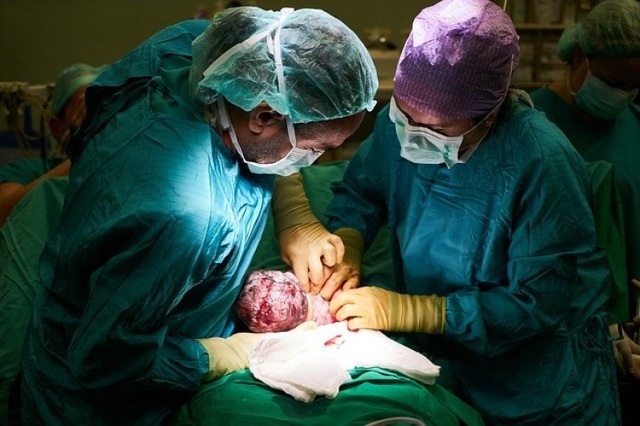
c-section
The phrase “C-Section mafia” is not an official term, but in Pakistan it is often used by critics, patients, and some media commentators to describe the belief that certain hospitals or doctors perform unnecessary Caesarean sections (C-sections) for financial or convenience reasons. There is evidence that concerns about excessive C-sections are taken seriously by medical organizations and researchers, but the issue is more complex than a simple conspiracy. �
UrduPoint +1
Some facts:
The World Health Organization (WHO) has stated that population-level C-section rates above roughly 10–15% do not necessarily improve maternal or newborn outcomes. �
BMJ +1
Studies and reports have found that C-section rates in Pakistan are generally higher in private hospitals than in public facilities, leading to concerns about financial incentives and convenience factors. �
Springer +1
The Pakistan Medical Association (PMA) and the Society of Obstetricians and Gynecologists of Pakistan (SOGP) have publicly warned about an “alarming and unjustified rise” in Caesarean deliveries. �
UrduPoint +1
Researchers also note that higher rates are influenced by many factors, including previous C-sections, maternal age, pregnancy complications, patient preferences, medico-legal concerns, and healthcare-system incentives. �
Pakistan Journal of Medical Research +1
At the same time, it is important not to assume that every C-section is unnecessary. Many are genuinely lifesaving for conditions such as fetal distress, placenta previa, obstructed labor, or severe maternal complications. �
ACAD +1
If someone is concerned that a C-section is being recommended without a clear medical reason, they can:
Ask the doctor to explain the specific indication.
Request information about alternatives and risks.
Seek a second opinion if time and circumstances allow.
Ask whether the situation is an emergency or if there is time to consider options.
So, while there is documented concern about overuse of C-sections in parts of Pakistan, describing it as a “mafia” is a popular allegation rather than a proven, organized entity. The evidence supports concerns about possible overuse and weak oversight, especially in some private-sector settings, but not every C-section recommendation is inappropriate
How c section affects females beauty?
A Cesarean section (C-section) can cause some physical changes, but its effect on “beauty” is often much smaller than people expect.
Common Physical Changes
Scar: Most C-sections leave a horizontal scar low on the abdomen (“bikini line”), which usually fades over time.
Abdominal appearance: Pregnancy itself—not just the C-section—can stretch skin and abdominal muscles, sometimes leading to loose skin or a small overhang above the scar.
Weight and body shape changes: Many changes people associate with a C-section are actually related to pregnancy, hormonal changes, and postpartum recovery.
Temporary swelling or numbness: Around the incision area, some women experience numbness, tightness, or altered sensation that can persist for months or longer.
What Doesn’t Change
A C-section does not directly affect:
Facial beauty
Skin quality (except normal pregnancy-related changes)
Hair texture
Overall attractiveness
Long-Term Appearance
Many women recover with:
A barely noticeable scar
Return of abdominal strength through exercise and rehabilitation
Minimal visible differences compared with women who delivered vaginally
Beauty Is Broader Than Physical Changes
Studies on body image after childbirth show that confidence, health, fitness, emotional well-being, and social support often influence how attractive a woman feels far more than the delivery method itself.
In practical terms, the most visible long-term cosmetic effect of a C-section is usually the scar, and for many women it becomes faint enough that it is difficult to notice. Pregnancy-related changes in weight, skin, and muscle tone generally have a larger impact on appearance than the C-section surgery itself.
How females height affects normal delivery?
A woman’s height can influence the likelihood of a normal vaginal delivery, but height alone does not determine whether she can deliver vaginally. Many shorter women have uncomplicated vaginal births, and many taller women still require a C-section for other reasons.
Why height matters
Height is sometimes used as a rough indicator of pelvic size. On average, shorter women tend to have smaller pelvic dimensions, which can increase the risk that the baby’s head will not fit easily through the birth canal (a situation called cephalopelvic disproportion).
General trends
These are population-level trends, not rules for individuals:
Height
Typical effect on delivery risk
Below 150 cm (4 ft 11 in)
Higher risk of labor complications and C-section compared with taller women
150–160 cm (4 ft 11 in–5 ft 3 in)
Slightly increased risk, but most women can still have normal deliveries
160–170 cm (5 ft 3 in–5 ft 7 in)
Average risk range
Above 170 cm (5 ft 7 in)
Slightly lower risk of pelvic-size-related labor problems
Factors that matter more than height
The chances of a normal delivery are often influenced more by:
Baby’s size and head circumference
Pelvic shape and dimensions
Mother’s weight and health
Whether this is the first birth or a subsequent birth
Baby’s position (head-down vs. breech)
Quality of obstetric care
Labor progress and contractions
What the statistics show
Research has found that women shorter than about 150 cm generally have a higher rate of C-sections and obstructed labor than taller women. However, height is only one risk factor and is not accurate enough by itself to predict delivery mode.
Bottom line
Short stature increases the statistical risk of labor difficulties, but most short women still deliver vaginally.
Height is a weak predictor compared with pelvic anatomy, baby size, and labor progress.
Obstetricians evaluate the whole clinical picture rather than making decisions based solely on height.
How C-section scars affect the marital life?
A C-section scar usually has little to no direct effect on marital life for most couples. The impact depends more on physical recovery, emotional adjustment, and the couple’s relationship than on the scar itself.
Physical effects
Most C-section scars are low on the abdomen and are often hidden by underwear or clothing.
Some women experience:
Temporary tenderness or numbness around the scar.
Itching or discomfort during healing.
Rarely, chronic pain or scar-related sensitivity.
These issues can affect comfort, including during intimacy, especially in the months after surgery.
Emotional and body-image effects
Some women may:
Feel self-conscious about the scar.
Worry that it makes them less attractive.
Feel disappointed if they had hoped for a vaginal birth.
However, many women view the scar as a reminder of childbirth and become comfortable with it over time.
Impact on intimacy
Doctors typically recommend waiting about 6 weeks after delivery before resuming sexual activity, though recovery varies.
Fatigue, hormonal changes, caring for a newborn, and postpartum mood changes often have a greater effect on intimacy than the scar itself.
Open communication between partners can help address any concerns.
Long-term outlook
Years after a C-section, the scar generally becomes flatter and less noticeable. Research does not show that having a C-section scar, by itself, causes marital problems or reduces relationship satisfaction.
If a scar causes persistent pain, significant cosmetic concerns, or emotional distress, treatments such as scar therapy, silicone sheets, steroid injections, or consultation with a plastic surgeon may help.
In most marriages, factors such as communication, mutual support, and adjustment to parenthood have a much larger influence on relationship quality than a C-section scar
About the Author