KimmelMelaniaTrump
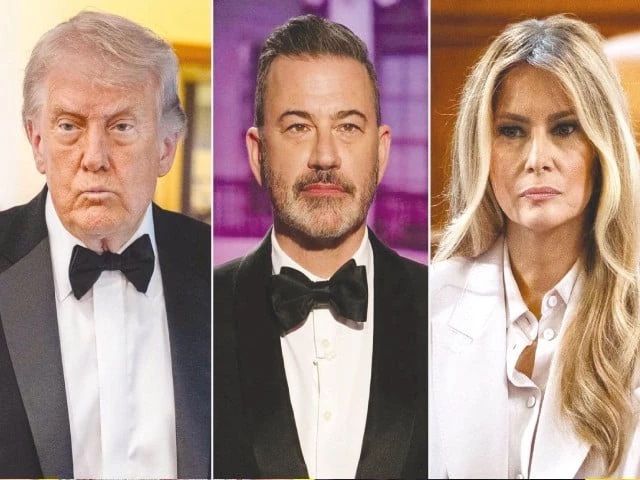
Kimmel said on Monday that his recent joke about First Lady Melania Trump had been misconstrued and was never intended as a “call to assassination,” pushing back against criticism that intensified following a shooting incident near a high-profile Washington gathering.
Addressing the issue during the opening monologue of ‘Jimmy Kimmel Live!’, the comedian clarified that his remark – describing Melania Trump as having “a glow like an expectant widow” – was a satirical reference to the age gap between her and the president, not a statement endorsing harm.
“It was a very light roast joke about the fact that he’s almost 80 and she’s younger than I am,” Kimmel said. “It was not by any stretch of the definition a call to assassination.”
Earlier in the day, Trump called for Kimmel’s immediate dismissal by ABC and its parent company, Walt Disney, describing the comment as “far beyond the pale.” The president’s reaction echoed a familiar pattern, as he has repeatedly targeted media figures and organisations he views as hostile, often urging punitive action.
Melania Trump also entered the fray, calling Kimmel’s remarks “corrosive” and emblematic of what she described as a broader decline in public discourse. In a post on X, she urged ABC executives to act, saying such content should not be allowed into American homes.
Kimmel responded by rejecting any link between his joke and the subsequent shooting incident in Washington, in which a suspect identified as Cole Allen allegedly opened fire at Secret Service agents after breaching a security checkpoint at the Washington Hilton, wounding one officer before being subdued.While expressing sympathy for those affected, Kimmel dismissed suggestions that his remarks had contributed to the atmosphere surrounding the incident. “I agree that hateful and violent rhetoric is something we should reject,” he said, before adding that addressing such concerns might begin closer to the political sphere.
The latest dispute has drawn renewed attention to an earlier episode in September last year, when Kimmel’s show was briefly suspended amid political pressure following controversial remarks about the assassination of conservative activist Charlie Kirk.
At the time, the head of the Federal Communications Commission publicly warned that broadcasters airing Kimmel’s programme could face regulatory consequences, including potential fines or challenges to their licences.
ABC moved to suspend ‘Jimmy Kimmel Live!’ within hours of those warnings, a decision that sparked a sharp backlash across the entertainment industry and among free speech advocates. Critics argued that regulatory pressure on broadcasters over satirical content risked undermining First Amendment protections, which traditionally grant wide latitude to comedians and media organisations, even when material is provocative or offensive.
The suspension was short-lived, but it marked a rare instance of a major network yielding, even temporarily, to political and regulatory pressure. Trump publicly welcomed the move at the time, reinforcing his long-standing criticism of late-night hosts and news outlets he accuses of bias.
Since then, Trump has continued to threaten action against broadcasters, including calls to revoke licences of networks he claims treat him unfairly. Legal experts, however, consistently note that such measures face significant constitutional barriers, with courts historically defending the rights of broadcasters to air satire and commentary.
The current controversy now places ABC and Disney once again under scrutiny, with the issue emerging as an early test for Disney CEO Josh D’Amaro, who assumed leadership of the company last month. Neither ABC nor Disney has issued an immediate response to the latest calls for Kimmel’s dismissal.
Public reaction has been sharply divided. Some voices have echoed the president’s criticism, arguing that the boundaries of acceptable humour were crossed, particularly given the timing of the remarks ahead of a violent incident.
Others, however, have warned that removing Kimmel would set a dangerous precedent for free expression in entertainment. “They’re going to take away freedom of speech for a lot of comedians,” said one observer, reflecting concerns that punitive action could have a chilling effect on satire, a genre that has long played a central role in American political culture.
The dispute also highlights a broader and intensifying tension between political figures and media personalities, particularly in an era where late-night television has increasingly blurred the line between comedy and commentary. Kimmel, like several of his peers, has frequently used his platform to criticise Trump, making him a recurring target.
About the Author