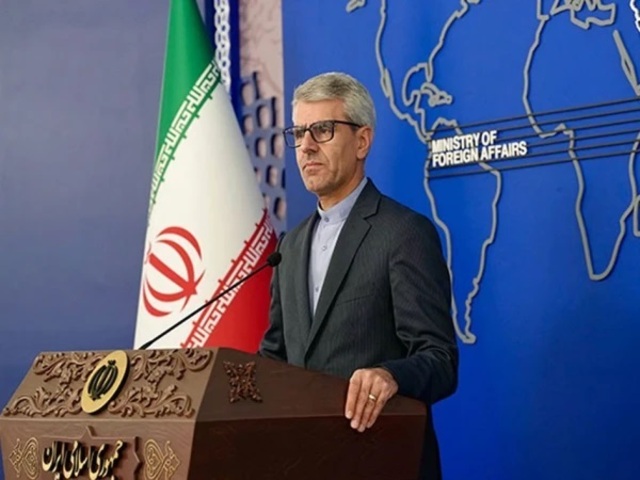
esmail baghai
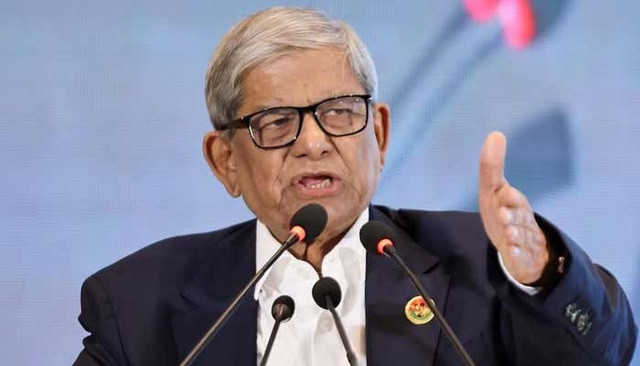
“Any plan that is based on the geopolitical and historical realities of the region, is comprehensive and inclusive, and correctly identifies the enemy and the threat, has a chance of helping to strengthen security and prevent instability and abuses by the Zionist enemy and its allies,” he added, referring to Israel.He added that Iran would not hold talks with the US as long as Washington continued to “violate the interim deal”, as per Al Jazeera.Baghaei said Iran has demanded compensation for damage caused by the US-Israel war and that the Strait of Hormuz could reopen if no third party interferes, according to Al Jazeera, and that the US was the cause of major insecurity in the Middle East.Iran has changed its secretary of the Supreme National Security Council, appointing former Revolutionary Guards commander Mohsen Rezaei as second-in-command on the body that coordinates the country’s security and foreign policy.
Rezaei is more of an outspoken public figure than his predecessor, Mohammad Baqer Zolqadr. The appointment was announced late on Sunday by President Masoud Pezeshkian’s deputy director of communications.Zolqadr had only been appointed as SNSC secretary in late March, after his predecessor, Ali Larijani, was killed in an air strike during the war pitting Iran against the US and Israel.No reason was given for the change, and it was not immediately clear if it would herald any policy change.Iranian Foreign Minister Abbas Araghchi said on Saturday that Iran and Oman were “very close” to an agreement on a new shipping route through the Strait of Hormuz — which has been all but closed during five months of war — but reopening it would depend on other conditions, including US compensation to Iran.Zolqadr meanwhile had listed other demands including ending US threats against Iran, stopping aggression against Iran and its Lebanese, Palestinian, Yemeni and Iraqi allies, lifting a blockade and sanctions on Iran and freeing Iranian assets.
The SNSC, formally chaired by the elected president, coordinates security and foreign policy, and includes top military, intelligence and government officials in addition to representatives of the supreme leader who has ultimate say over all matters of state.
Rezaei, 71, commanded Iran’s Islamic Revolutionary Guards Corps from 1981 to 1997, including during much of the Iran-Iraq war. He later served as secretary of Iran’s Expediency Discernment Council for more than two decades and as vice president for economic affairs from 2021 to 2023 under hardline President Ebrahim Raisi.He holds a doctorate in economics from the University of Tehran but has spent much of his career in Iran’s security and political establishment.
A decree from Supreme Leader Mojtaba Khamenei on Sunday also appointed Rezaei as his representative on the SNSC, joining fellow hardliner Saeed Jalili, with the decree citing Rezaei’s “valuable experiences”, including his role during the 1980-88 Iran-Iraq war.
In the same decree, Khamenei appointed Zolqadr as his political adviser.Iran said it was nearing a final pact with Oman defining new shipping lanes between them through the Strait of Hormuz but repeated that the US must meet other conditions, including compensation and an end to sanctions and military threats, before the strategic waterway is reopened.
A US official told Reuters on Friday that Iran and Oman were close to a deal that could pave the way for restoring safe passage through the strait, a major conduit for oil and gas shipping before Iran blocked Hormuz in response to US and Israeli attacks on Tehran that began in late February.
Iranian Foreign Minister Abbas Araghchi said on Sunday an agreement with Oman on the strait was in its “final stages” but reiterated comments made on Saturday that Tehran would not reopen the channel unless the US met certain demands made by Tehran.The deal with Iran would set out the new shipping lanes to be used once the US fulfils those conditions and the strait is reopened, Iran’s Mehr news agency quoted him as saying.
Iran and the US are not engaged in direct talks, and Tehran will not start them as long as Washington breaches an interim deal signed in June, Araghchi said, adding that messages were being exchanged through intermediaries.
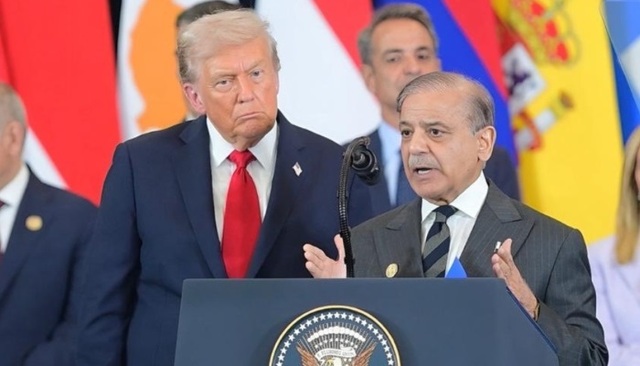
US President Donald Trump said in an interview with Axios that the US was “low-keying” it with Iran. “We are only semi-negotiating with them. We are just watching Iran with its huge inflation and the fact they have no money.”Araghchi said reopening the strait would depend in part on the US paying compensation for damage it caused in widespread attacks on Iran.
The secretary of Iran’s top national security body, Mohammad Bagher Zolghadr, also listed ending further US threats against Iran; halting aggression toward Iran and its Lebanese, Palestinian, Yemeni and Iraqi allies; removing a US naval blockade in the Gulf; lifting sanctions on Iran; and releasing frozen Iranian assets.The United States and Israel launched air strikes on Iran more than five months ago. Trump has said the attacks were aimed at keeping the Islamic Republic from developing nuclear weapons and degrading its ability to threaten the region.
Washington and Tehran agreed to a ceasefire in June, but the US reimposed a blockade on Iranian shipping in the Gulf in July, a move that Tehran said violated the truce, which by then had already broken down.
“Once the deal is announced to restore commercial shipping without impediments, the United States will lift the blockade of Iranian ports,” the US official told Reuters on condition of anonymity.
US actions would be tied to Iran’s implementation of its commitments, the official said.
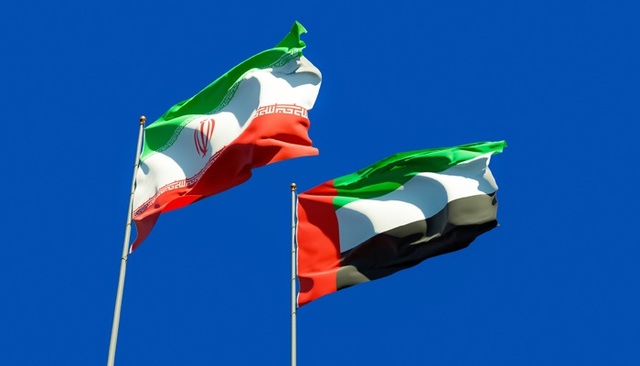
The US comments indicated delicate sequencing toward a deal that sources had told Reuters appeared to be set to give Tehran control over vessel traffic entering the Gulf through the strait, which shippers have said was not easily workable.The United Arab Emirates said on Saturday that Iran had attacked a ship affiliated with its state oil company. There was no immediate comment from Iran, whose Revolutionary Guard Corps previously has attacked ships that it said tried to cross the strait without Iranian permission.A rift between Israel and the US is deepening as Washington pushes to wind down fighting in Gaza, Lebanon and Iran, Israeli broadcaster Channel 13 reported on Sunday.
Citing unnamed political sources, it said US Central Command (CENTCOM) chief Adm. Brad Cooper conveyed the message during a visit to Israel on Saturday that Washington wants progress toward “closing the three fronts.”
The push has exposed differences over how far Israel is prepared to scale back its military operations across the region.
Israeli military officials told their US counterparts that Israel intends to preserve its freedom to act against Iran if Tehran continues developing its nuclear program or rebuilding its ballistic missile capabilities, according to the report.
In Lebanon, Washington is pushing for further Israeli withdrawals from positions inside the security zone in the south, Channel 13 said.
In Gaza, the US is pressing for progress and the deployment of a multinational force that currently includes hundreds of troops from Morocco and Uganda, according to the broadcaster.
Israeli security officials have also raised objections with the political leadership in recent days over US demands to halt targeted killings and scale back military operations in Gaza, the report said.
Channel 13 noted that those demands do not explicitly appear in proposals currently under discussion.
A senior Israeli military officer cited by the broadcaster said Washington’s message to Israel’s security establishment was to “move toward closing the three fronts.”
The report came as US President Donald Trump signalled Sunday that Washington is taking a more restrained approach toward Iran for now.
US Democratic Senator Chris Murphy said on Sunday that President Donald Trump has “lost this war” with Iran, arguing that continued fighting is weakening the US while strengthening Tehran.
“America is weaker. Iran is stronger,” Murphy told NBC, saying he would support even a “bad deal” to end the war and reopen the Strait of Hormuz.
He said the cost of reopening the strategic waterway was rising as negotiations remained stalled.
Iranian officials have demanded reparations, the lifting of sanctions and a halt to US military operations, according to The Washington Times.
“The war needs to end because every day that the war continues, America gets weaker, Iran gets stronger, and people here in the United States get screwed as prices go up and up and up,” Murphy said.Murphy said he would oppose funding to continue the war but would support replenishing US munitions after the conflict ends.Iranian strikes on the Strait of Hormuz shipping have been coupled with increased attacks by its Yemen-based allies, the Houthi rebels, who have targeted ships at another oil chokepoint on the other side of the Arabian Peninsula between the Red Sea and Gulf of Aden.
The Houthis also declared a naval blockade against Saudi Arabia in the Red Sea last month in response to what they said was a Saudi siege on them in Yemen, an allegation denied by Riyadh, which backs Yemen’s internationally recognised government.
The Yemeni rebel group said they had attacked Saudi Aramco’s Jazan refinery on Sunday, two days after the kingdom signed a defence pact with Sunni Muslim allies Turkiye and Pakistan in response to growing regional instability from the US-Israeli war on Shi’ite Iran.The Saudi energy ministry said a fire had broken out at the refinery but was later extinguished with no injuries, without giving a cause.
Turkish Foreign Minister Hakan Fidan said the new alliance was not directed against Iran or any other country, but rather served as a general pledge to support security.
Fighting has escalated between the Houthis and government forces in Yemen, with the Yemeni military on Monday saying seven people, including military personnel and civilians, were killed in a Houthi attack on the Red Sea port city of Mokha.
Air defences intercepted and shot down 11 Houthi drones that participated in the attack, the military said.Oil prices rose on Monday as Iran’s demands for reopening the Strait of Hormuz raised concerns over prolonged disruptions to global energy markets.
International benchmark Brent crude futures for October delivery climbed 1.09% to $84.46 a barrel, while US West Texas Intermediate futures for September rose 0.84% to $78.84.
Iranian Foreign Minister Abbas Araghchi said Sunday that the strategic waterway would not reopen until Washington meets conditions including easing sanctions and paying war reparations.
He also said Tehran is not currently in direct talks with the US, despite Washington’s claim that a deal is near.
“The Strait of Hormuz remains effectively closed,” Westpac said, adding that uncertainty remains high as the Iran war enters its sixth month.
Despite the energy market volatility, Asian stocks rose, with Japan’s Nikkei 225 gaining 2.1%, South Korea’s Kospi up 0.7% and Hong Kong’s Hang Seng Index 0.6% higher.The US Central Command (CENTCOM) said Sunday that American forces redirected 55 commercial vessels, disabled two and boarded two others as part of strict enforcement of a US blockade against Iran.
CENTCOM said in a post on the US social media platform X that US sailors were standing watch aboard the USS Ross (DDG 71), one of more than 20 US warships deployed to the Middle East in support of military missions, including enforcement of the blockade.
The command did not provide additional details about the vessels or the circumstances surrounding the actions in its post.
About the Author