iranicommanderinchief
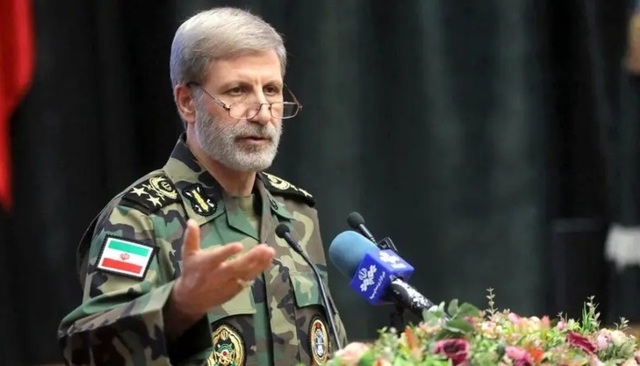
(Daily Jurat)Iran’s army chief warned on Thursday that “no enemy troops should survive” if the US attempts a ground invasion. “In the event the enemy attempts a ground operation, no one should survive,” Amir Hatami said in comments carried by state broadcaster IRIB.Hatami said the military leadership has instructed operational commands to closely monitor movements by the US forces and respond in a timely manner.
“It is necessary to monitor the enemy’s movements and actions with utmost precision and extreme caution, moment by moment, and to implement plans to counter its attack methods at the appropriate time,” he said. “The spectre of war must be removed from our country, and security must prevail for all, as it is unacceptable for places to be safe while our people are in danger,” he added.
Earlier, Iranian Foreign Ministry spokesperson Esmaeil Baqaei said Iran will take ‘necessary actions’ to prevent the Strait of Hormuz from being exploited for ‘military aggression’ against the country, according to Tasnim News Agency.
Baqaei accused the US of deliberately targeting civilians and described the attack as a “despicable war crime.”According to visual evidence examined by the New York times and weapons experts, a newly developed US missile struck civilian sites in southern Iran, targeting a sports hall and an adjacent elementary school near a military compound in the city of Lamerd.
An analysis of videos and photos from the scene suggested the weapon used was a Precision Strike Missile, a short-range ballistic missile developed by the US Army.
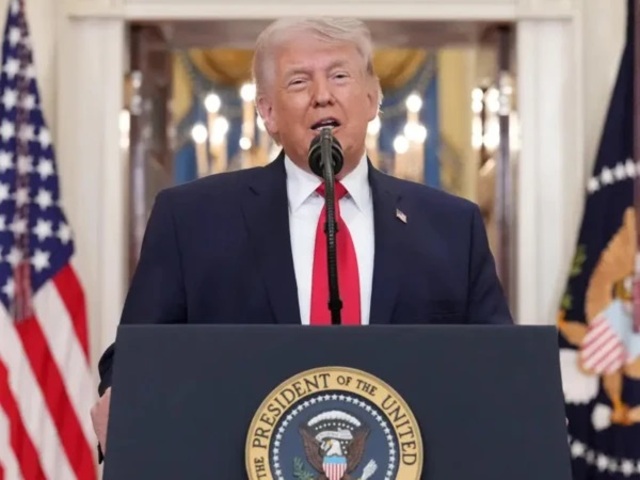
Trump said in a televised speech on Wednesday night that the US military had nearly accomplished its goals in Iran, but offered no clear timeline for ending the monthlong war and vowed to bomb the country back into the “Stone Ages.”But he declined to lay out a concrete plan to wind down the war, now in its fifth week, beyond saying that the US would finish the job “very fast.” “We have all the cards,” Trump said from the White House in his first primetime address since the US and Israel launched the war on February 28. “They have none.”
He glossed over some major unresolved issues, such as the status of Iran’s enriched uranium and access through the Strait of Hormuz, a conduit for global oil supplies which Iran has effectively closed.
The strait, he said, would open “naturally” once the war ended.
Trump said he expects the war to continue for another two to three weeks but believes the conflict is approaching an end.
In response, a spokesperson for Iran’s Khatam al-Anbiya Central Headquarters, cited by the Fars news agency, said US and Israeli assessments of Iran’s military strength are flawed.
“As we said, we announce to the Zionist-American enemies that your information about our military power and equipment is incomplete. You are completely ignorant of our enormous and strategic capabilities,” the spokesperson said.
He dismissed claims that Iran’s missile production centers and advanced systems had been destroyed.
“Do not think that you have destroyed our strategic missile production centres, our long-range offensive drones, modern air defence and electronic warfare systems, or our special equipment — because such assumptions will only make matters worse,” he said.
The spokesperson said Iran’s strategic military production continues in undisclosed locations beyond the reach of its adversaries. “The centres you imagine are of little importance, and our strategic military production is taking place in places you do not know and will never be able to reach,” he added.He warned that the scale of Iranian attacks would increase. “After the powerful and unbelievable blows you have received so far, expect from us actions that are stronger, wider, and more destructive,” he said.He added that the war would continue until Iran’s adversaries “wither, are humiliated, regret completely, and surrender.”
Meanwhile, the spokesperson for Iran’s Ministry of Defence said that “the enemy has been defeated in seven arenas,” according to Fars news agency.
The Defence Ministry demanded either to be compensated or to retaliate in equal measure through the removal of American military personnel from the region, destruction of American bases, and guaranteeing no renewed war against Iran and the region.
Iran launched three barrages of missiles toward northern Israel since early Thursday, according to Israeli Channel 12. Air raid sirens sounded across wide areas of northern Israel, while the channel said interception efforts were underway.
Iranian state television claimed that Iranian missiles reached the port city of Haifa minutes after Trump’s remarks about Iran having only a limited number of missile launchers left.
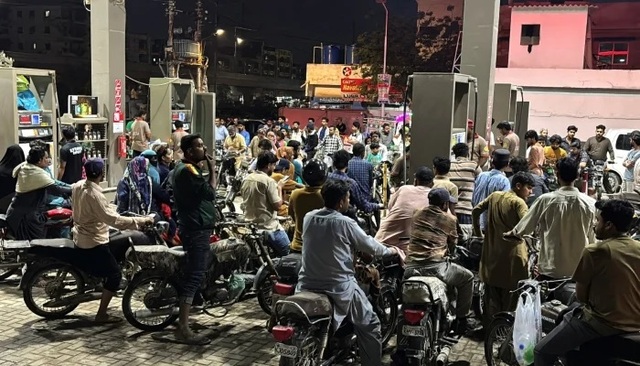
Trump’s 19-minute address broke little new ground and offered scant reassurance to Americans and US allies who are feeling increasing pain at the gas pump and growing impatience with the war.
Facing a war-wary American public, sliding approval ratings, and pressure from some allies to outline his war aims in more precise and consistent terms, Trump said the US had destroyed Iran’s navy and air force, and crippled its ballistic missile and nuclear programs.
Stocks fell, the dollar firmed, and oil rose shortly after Trump’s comments, reflecting widespread sentiment that the conflict is likely to drag on for some time.
Iran has retaliated with drone and missile strikes targeting Israel, along with Jordan, Iraq, and Gulf countries hosting US military assets, causing casualties and damage to infrastructure while disrupting global markets and aviation.French President Emmanuel Macron said on Thursday it would be unrealistic to launch a military operation to force open the Strait of Hormuz, after US President Donald Trump challenged US allies to work towards reopening it.
Thousands of people have been killed across the Middle East since February 28, when the US and Israel struck Iran, triggering Iranian attacks on Israel, US bases and the Gulf states, and Tehran effectively closing the waterway that carries about a fifth of global oil and liquefied natural gas supplies.
“Some people defend the idea of freeing the Strait of Hormuz by force via a military operation, a position sometimes expressed by the United States, although it has varied,” Macron told reporters during a trip to South Korea.
“This was never the option we have supported because it is unrealistic,” he said. “It would take forever, and would expose all those who go through the Strait to risks from the guardians of the revolution but also ballistic missiles,” he said.
Macron, who has worked with European and other allies to build a coalition to guarantee free passage through Hormuz once hostilities have stopped, said this could only be done by talking to Iran.
“What we say from the beginning is that this strait must be reopened because it is strategic for energy flows, fertilisers and international trade, but that it can only be done in consultation with Iran,” he said.Asked about Trump’s criticism of NATO allies and threats to pull the US out of the alliance, Macron said:
“I don’t want to provide a running commentary of an operation the Americans have decided on their own with Israel. They can deplore the fact they’re not being helped, but that’s not our operation. We want peace as soon as possible.”
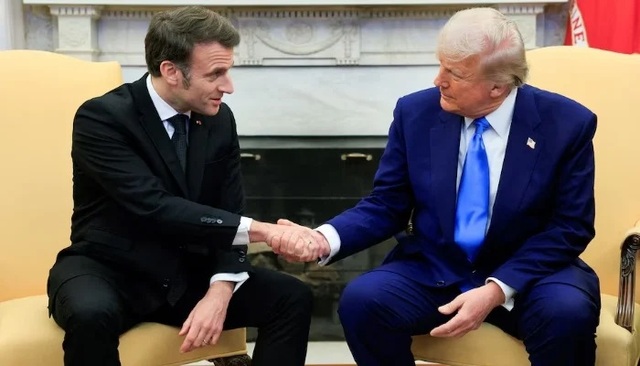
Macron also said that Trump’s comments mocking him and his wife Brigitte, were “neither elegant nor commensurate” with the moment.
Two Israelis were injured, and a building was damaged, on Thursday after rockets fired from Lebanon struck northern Israel, local media reported.
Channel 12 said that more than 30 rockets were launched toward the Galilee region within a short time, bringing the total number of rockets fired since midnight to around 50.
Israel’s public broadcaster KAN said two people sustained “minor” injuries after rockets fell in the settlement of Kiryat Shmona, adding that a building was also damaged.
Hezbollah said it targeted the settlements of Avivim, Metula, and Kiryat Shmona in northern Israel twice in succession with rockets.
More than 1 million people have been displaced in Lebanon, representing over 18% of the population, following intensified conflict and mass evacuation orders since early March 2026, according to Al Jazeera and other international sources.
The displacement crisis is overwhelming, with over 130,000 fleeing across borders, and massive numbers seeking refuge in shelters.
As of April 1, the Lebanese Ministry of Health reported that 1,318 people have been killed in Lebanon due to Israeli airstrikes and ground operations.
Authorities in Abu Dhabi said Thursday that falling debris from an intercepted missile caused minor damage near an industrial area, with no injuries reported.
The incident occurred near Khalifa Economic Zones, Abu Dhabi, after air defence systems intercepted a missile, the Emirates News Agency reported.
Officials said the debris caused limited material damage and confirmed there were no casualties.
A day earlier, Trump told reporters Tehran did not have to make a deal as a prerequisite for the conflict to wind down.
While the president on Wednesday briefly acknowledged growing concerns among Americans that the war is making gasoline unaffordable, he insisted that prices would soon go down and that the increases were mainly Iran’s fault.
He added that countries that get most of their oil supply from the Gulf region should take the lead in opening the strait. Britain, France and other US allies have said they are willing to help keep the strait open, but only after hostilities have ceased.
“They can do it easily,” Trump said. “We will be helpful, but they should take the lead in protecting the oil that they so desperately depend on,” he said.
Trump has expressed anger that NATO allies have not offered to help open the strait, even threatening to withdraw from the 76-year-old alliance.
While he had told Reuters earlier in the day that he would discuss the US relationship with NATO in his speech, he did not mention the bloc.In a Reuters/Ipsos survey conducted Friday through Sunday, 60% of voters said they disapproved of the war, while 35% approved. Some 66% of respondents said the US should work to end its involvement in the war quickly, even if that meant not achieving the goals set out by the administration.
Trump, meanwhile, has flirted with options both to escalate and de-escalate the conflict, and his next moves are unclear, even to some close advisers. His speech offered little additional clarity.
Administration officials have floated a daring operation to physically seize Iran’s remaining stockpiles of highly enriched uranium, as well as ground operations to seize strategic pieces of land – including parts of Iran’s coastline and Kharg Island, through which Iran exports the vast majority of its oil.
Thousands of additional troops continue to sail toward the Gulf region, indicating the president wants to keep his military options open.
Trump asked Americans to “keep this conflict in perspective,” noting prior wars in Iraq, Vietnam and Korea had required far longer US involvement.
About the Author