Irandronestrikes
(Daily Jurat)Iran has accused Israel of carrying out drone strikes on energy and civilian sites in the Gulf, calling the attacks a deliberate effort to provoke regional tension and draw Arab states into a US-Israeli war on Tehran, according to Turkish public broadcaster TRT World.
A Foreign Ministry official told Middle East Eye: “I can categorically say that some of the attacks were not carried out by us [Iran].” The official said Israel was behind strikes on Saudi Arabia and at least one attack on Oman, but did not specify which incidents.
The statements follow multiple drone and missile strikes on Saudi facilities, including the Ras Tanura oil refinery and the US embassy in Riyadh, and two attacks on Oman’s Duqm Port, a major logistics hub that has hosted US naval access since 2019.
On Thursday, a drone crashed near the airport in Nakhchivan
Two Iranian sources told MEE that Israel’s Mossad executed the strikes using an established network of agents inside Iran. “This is an Israeli effort to sabotage regional peace and alliances between neighbours,” one source said.Another Iranian source said Tehran had privately informed Saudi Arabia it was not responsible for the Ras Tanura strike. “This is an Israeli effort to sabotage regional peace and alliances between neighbours,” the source added.
Additionally, according to UK news outlet Sky News, a “Shahed-like drone” which targeted a Royal Air Force base in Cyprus was not launched from Iran, according to a Ministry of Defence spokesperson.
Gulf countries have been targeted by repeated waves of Iranian drone and missile attacks in retaliation for the massive US-Israeli air campaign.
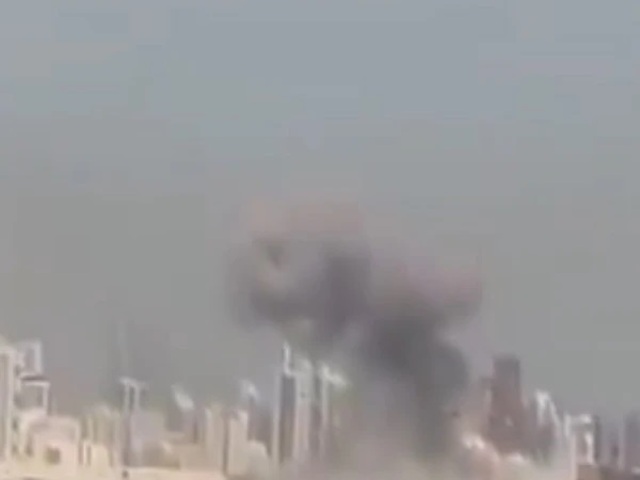
AFP journalists on the ground in Doha described Thursday’s blasts as some of the most intense since Iran began targeting the Gulf state on Saturday. A column of black smoke was seen on the Doha horizon.The targeting of Qatar on Thursday came hours after the country’s prime minister lambasted Iran’s foreign minister during a call, in the first high-level contact between the two countries since the Islamic Republic launched its missile and drone campaign.
Qatari Premier Sheikh Mohammed bin Abdulrahman Al Thani accused Iran of seeking to “harm its neighbours and drag them into a war that is not theirs”, on the call with Iran’s Abbas Araghchi, according to a statement by Qatar’s foreign ministry.
Explosions were also heard in Bahrain’s capital, Manama, on Thursday.
In neighbouring Saudi Arabia, officials said they had intercepted three cruise missiles and several drones.”Three cruise missiles were intercepted and destroyed outside the city of Al-Kharj,” the Saudi defence ministry posted on X.
Elsewhere, a tanker was hit by a “large explosion” in waters off Kuwait, causing an oil spill, the British maritime security agency UKMTO reported.Azerbaijan on Thursday summoned the Iranian envoy after two people were wounded in drone hits on an airport and near a school.
The attacks around midday involved at least two drones that crossed from Iran into Azerbaijan’s exclave of Nakhichevan, which borders Iran and is separated from mainland Azerbaijan by Armenia, said a foreign ministry statement.
“One drone fell on the terminal building of Nakhichevan Airport, while another drone fell near a school building in the village of Shekerabad,” the ministry said, damaging the airport and wounding two civilians.The ministry said it had summoned Iranian envoy in Baku to express “strong protest” over the attack, which “contradicts the norms and principles of international law and contributes to rising tensions in the region.
“Azerbaijan reserves the right to take appropriate retaliatory measures,” it added.
Iran has long expressed concern that Israel — a close ally of Azerbaijan and a key arms supplier — could use Azerbaijani territory to stage attacks.Last June, Azerbaijan reassured Iran that it would not allow its territory to be used for attacks against Tehran after Israel launched a large-scale strike on Iranian targets.
The Israeli military said it identified a fresh round of missiles launched from Iran on Thursday, the sixth day of a war engulfing the Middle East.
“A short while ago, the IDF (military) identified missiles launched from Iran toward the territory of the State of Israel. Defensive systems are operating to intercept the threat,” the military said in a statement.
Iran has sent out a second warship towards Sri Lanka’s territorial waters, a day after a US submarine destroyed an Iranian frigate, killing at least 87 sailors, a minister told parliament.
Media minister Nalinda Jayatissa said the second Iranian warship was just outside Sri Lankan waters, but gave no further details.
Official sources said the vessel was carrying more than 100 crew and feared they too could be targeted the same way a sister vessel was sunk by a US submarine just off Sri Lanka’s southern coast on Wednesday.
A series of blasts hit Tehran and its western outskirts, local media reported, after Israel said it had launched another wave of strikes on the Iranian capital.
The Fars news agency reported an explosion in western Tehran, while the Shargh and Iran papers reported at least one explosion in Karaj, a neighbouring city to the west.Iranian news agency Tasnim said the country had activated its defences in response.
Meanwhile, Iran says it had targeted the headquarters of Kurdish forces in Iraqi Kurdistan with three missiles, following strikes on Kurdish regions in both Iran and Iraq.
The strikes, which killed a member from an exiled Iranian Kurdish group, according to a representative, followed a warning from Iranian officials.
Israel said it carried out strikes on Beirut targeting Iran-backed militant group Hezbollah early Thursday, while Lebanese state media reported an Israeli drone strike killed a Hamas official.
Lebanon’s state-run National News Agency (NNA) reported several strikes, including two in the Hezbollah stronghold of south Beirut, where AFPTV footage showed smoke rising.
Israel’s military, which earlier told residents to leave the suburbs where the strikes were reported, said its forces hit “several command centres belonging to the Hezbollah terrorist organisation” in the city.
There were no immediate reports of casualties.
The NNA said that a pre-dawn Israeli drone strike hit an apartment in Beddawi, a Palestinian refugee camp near Tripoli, killing senior Hamas official Wassim Atallah al-Ali and his wife.
The report noted that Ali’s brother, also a Hamas official from Beddawi, was killed in an Israeli air strike during the war triggered by Hamas’s 2023 attack on Israel.
Separately, the NNA reported that a drone hit a vehicle in south Lebanon, killing three people. It did not speculate who was behind the strike.
Another “enemy” air strike hit a house in Tyre district, the NNA said.
Israel has not claimed the latest attacks reported by the Lebanese news agency.
“We are facing aggression… our choice is to confront it until the ultimate sacrifice, and we will not surrender,” Hezbollah leader Naim Qassem declared in his first speech since the latest round of fighting broke out.
“For us, this is an existential defence,” he added.
Lebanese authorities announced at least 72 people killed, 437 wounded and 83,000 displaced from their homes since Monday.
Iran launched a wave of missiles at Israel early on Thursday as well, sending millions of residents into bomb shelters as the US-Israel war with Iran entered its sixth day and just hours after moves to halt the US air assault were blocked in Washington.
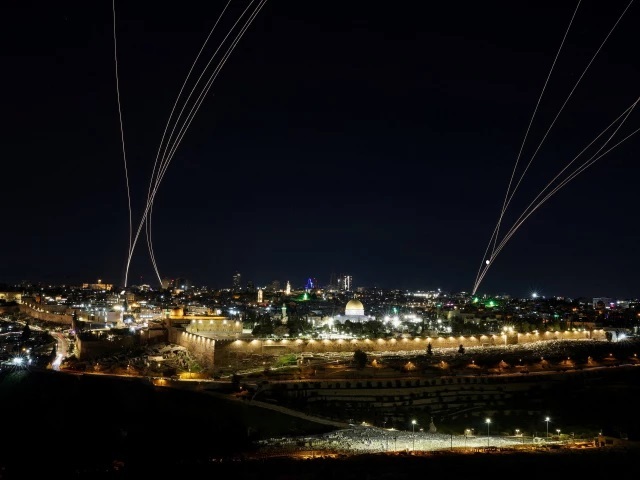
Explosions were heard in Jerusalem after warnings of incoming Iranian missile fire, according to AFP journalists, but Israel’s emergency services said there were no known casualties.
Tasnim reported that several explosions were heard in Tehran on Thursday morning. It said the country had activated its defences in response.
The US Senate voted 53 to 47 not to advance the resolution, largely along party lines, with all but one Republican voting against the procedural motion and all but one Democrat supporting it.
Qatar has begun evacuating residents of its capital living near the US embassy as a precautionary measure, the interior ministry said, after Iranian strikes.Repatriation flights departed the Middle East on Wednesday as governments rushed to bring home tens of thousands of citizens stranded by the war. A British flight to repatriate UK nationals did not take off as scheduled from Oman and was rescheduled for later on Thursday, Sky News reported.
Commercial air traffic remained largely absent across much of the region, with major Gulf hubs, including Dubai, the world’s busiest airport for international passengers, affected.
President Donald Trump hailed the US performance in the war, saying Iran’s leaders were rapidly being killed, and vowing to push on.
“We’re doing well on the war front, to put it mildly. Somebody said on a scale of 10, where would you rate it? I said about a 15,” Trump told a gathering of tech bosses.
Prime Minister Benjamin Netanyahu’s office said that Israel and Washington had made “historic gains” in the war.
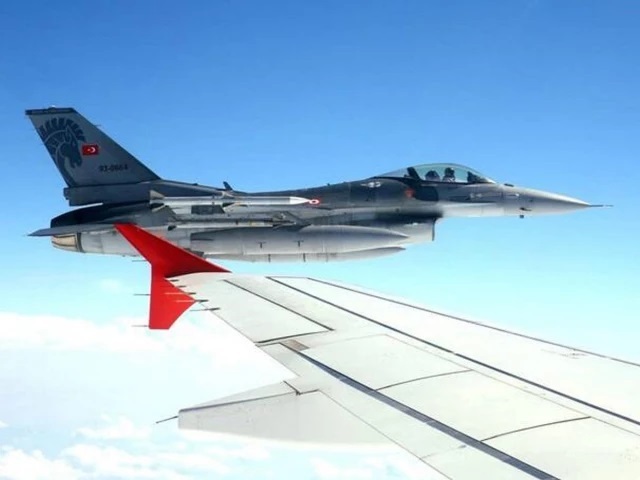
The US, Israel-Iran war has widened sharply, with a US submarine sinking an Iranian warship off Sri Lanka on Wednesday, killing at least 80 people, and NATO air defences destroying an Iranian ballistic missile fired towards Turkey.
The missile incident is the first time that Turkey, which borders Iran and has NATO’s second-largest military, has been drawn into the conflict, but US Defence Secretary Pete Hegseth said there was no sense that it would trigger the Atlantic alliance’s collective-defence clause.
The escalation came as the powerful son of Iran’s slain supreme leader emerged as a frontrunner to succeed him, suggesting Tehran was not about to buckle to pressure from the United States and Israel’s military campaign that has killed hundreds and convulsed global markets.
The war continued to paralyse shipping through the Strait of Hormuz on Thursday, choking off vital Middle East oil and gas flows. Trump has pledged to provide insurance and naval escorts for ships to contain soaring costs, with oil prices rising on Thursday. At least 200 vessels remain anchored off the coast, according to Reuters estimates.
The US Navy will escort oil tankers through the Strait of Hormuz “as soon as it can” but is focused on the conflict for now, US Energy Secretary Chris Wright said on Fox News on Wednesday.
“No, not yet … We’ll do that as soon as we can. Right now, our Navy, and of course, our military, is focused on other things, which is disarming this Iranian regime,” Wright said, when asked if any commercial vessels had requested US Navy assistance in the Gulf.
Asian shares rallied on Thursday after days of sharp losses, while US stocks closed up on Wednesday on hopes that the war might end soon. Some traders said the improved sentiment followed a New York Times report that Iranian intelligence had reached out to the CIA early in the war about a path towards ending it.
A source from the Iranian intelligence ministry rejected the article as “absolute lies and psychological warfare in the midst of war”, Iran’s semi-official news agency Tasnim reported.
Repatriation flights departed the Middle East on Wednesday as governments rushed to bring home tens of thousands of citizens stranded by the war.
Commercial air traffic remained largely absent across much of the region, with major Gulf hubs, including Dubai, the world’s busiest airport for international passengers, affected.
About the Author